

Barramundi Runoff Fishing In NT
Dirty water, bait stacking up, and barra switching into full ambush mode — this is what the runoff is all about.
Fishing the Barra Runoff: Where Floodwaters Trigger a Feeding Frenzy
Deep within Kakadu National Park, the South Alligator River and its winding tributaries transform dramatically during the runoff, turning into one of Australia’s most electrifying barramundi fisheries. As monsoonal floodwaters begin to recede, vast volumes of water drain from the floodplains back into the main river system, carrying with them baitfish, prawns, and nutrients that ignite the entire food chain. What forms is a perfect ambush environment — lines of dirty water pushing against clearer channels, submerged structure hidden beneath the surface, and bottlenecks where predators lie in wait. It’s here, in this shifting, tea-coloured flow, that barramundi gather in numbers, switching into full hunting mode.
For anglers, the Kakadu runoff is raw, visual, and often explosive. Barra stack up along drains, creek mouths, and pressure points, using the current to their advantage as bait is funnelled directly toward them. Every cast into the mixing water carries anticipation — a subtle tap can instantly turn into a brutal strike, followed by powerful runs and head shakes that define barramundi fishing. The key is reading the water: identifying where clean meets dirty, where current slows, and where bait is forced to concentrate. When everything aligns, the action can be relentless, with multiple fish hooked in quick succession as the system comes alive around you.
To experience this phenomenon firsthand, we explored the South Alligator system with local expert guide Josh from Kakadu Fishing Tours. Specialising in runoff barramundi, Josh’s deep understanding of the river and its seasonal movements put us right in the strike zone, targeting trophy barra using a well-balanced tackle setup suited to the power and aggression of these fish. From navigating narrow tributaries to working key drains at the right stage of the tide, every decision was dialled into one goal — connecting with big barramundi at the peak of the runoff bite.
Quick Facts
- The “Alligator Rivers” were mistakenly named by early explorers who thought the crocodiles were alligators — they’re actually saltwater crocodiles.
- The runoff typically occurs from March to May, as monsoonal floodwaters drain back into the river, concentrating bait.
- Barramundi are protandrous hermaphrodites — they start life as males and change into females as they grow larger.
- Prime runoff fishing zones include creek mouths, drains, and colour change lines where dirty and clean water meet.
- Barramundi use a lateral line sensory system to detect vibrations, allowing them to hunt effectively in dirty, low-visibility water.
- Large barramundi often sit just off the main current, conserving energy before ambushing bait swept past them.
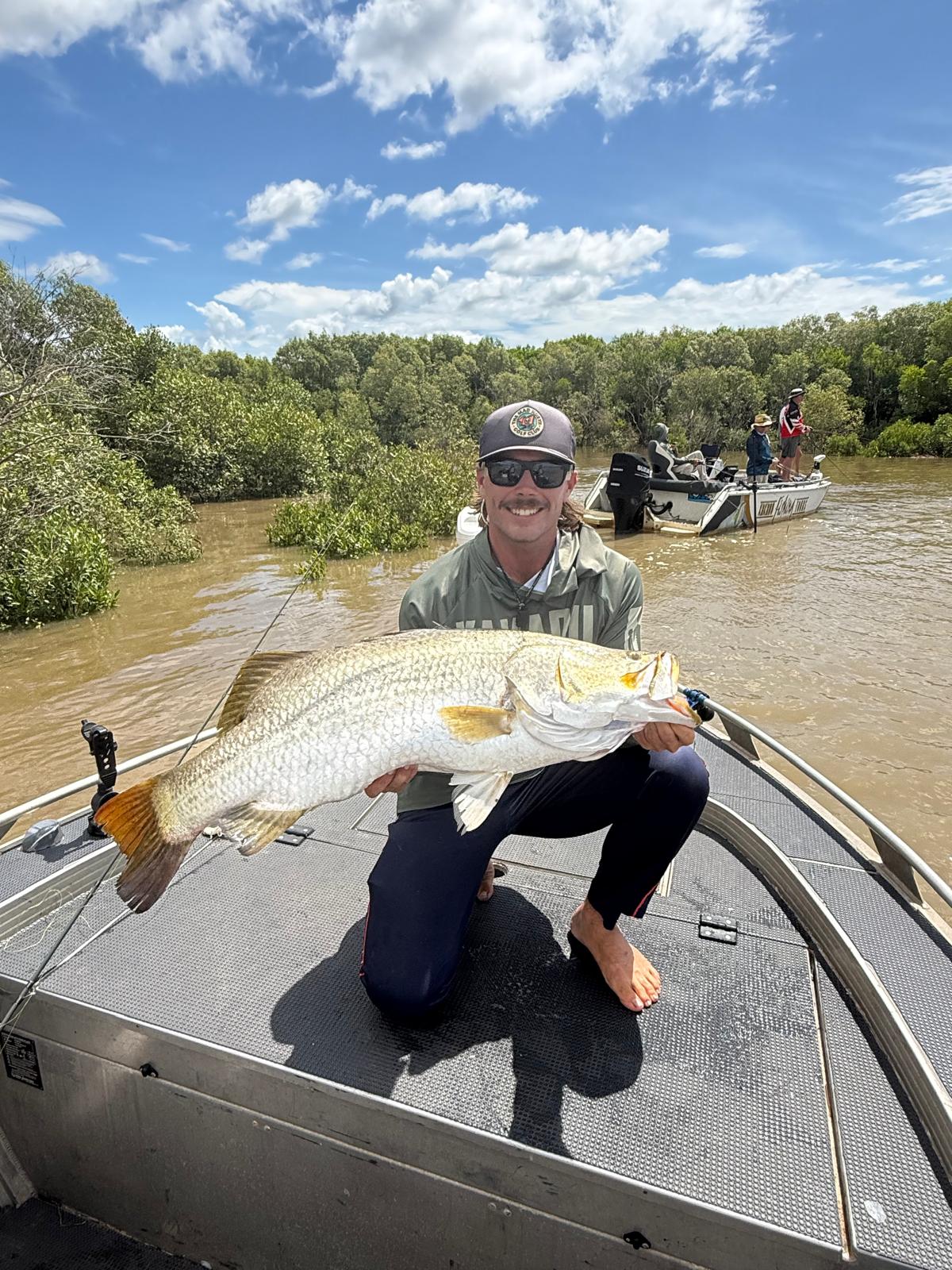
Our Guide:
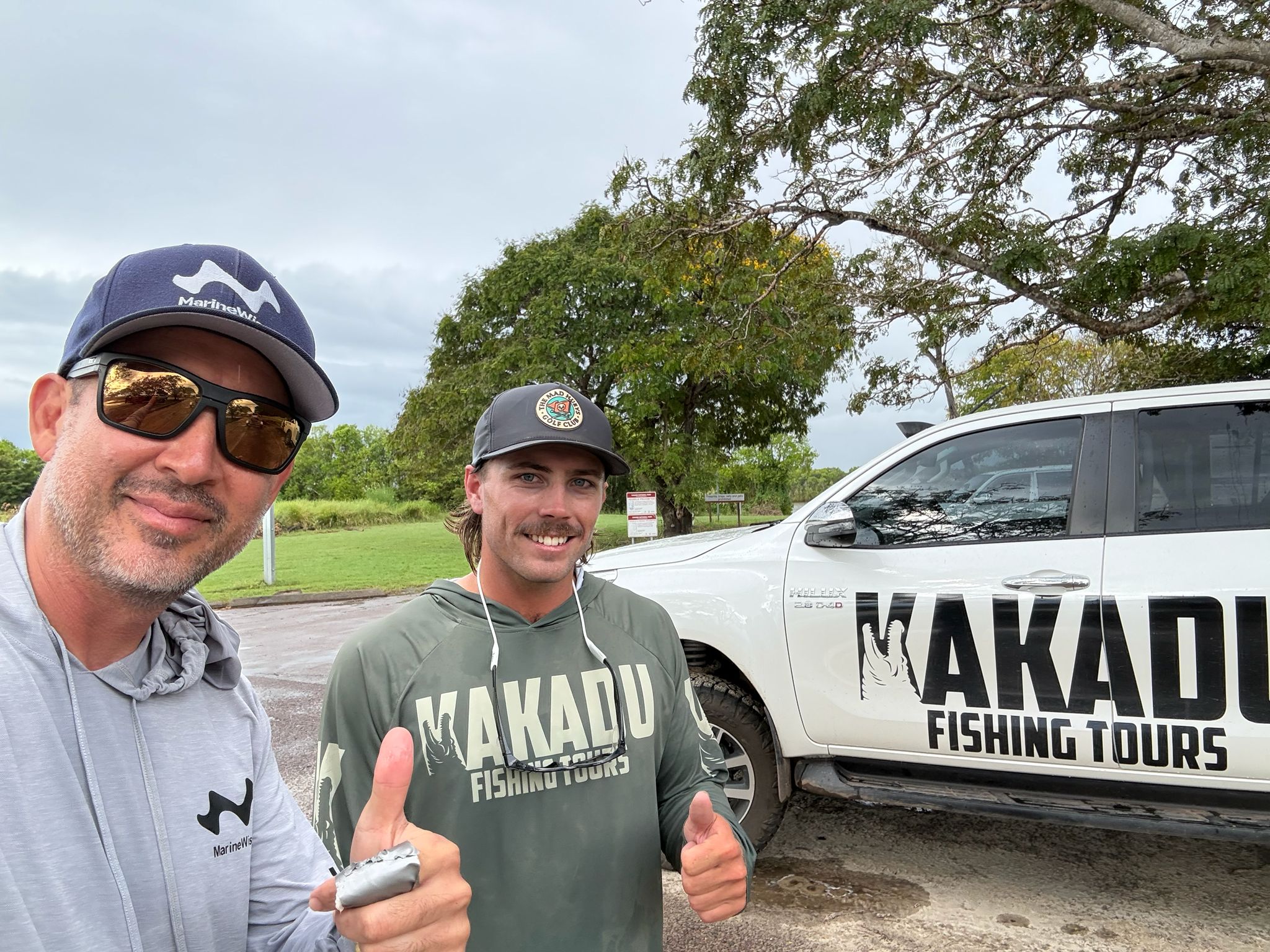
Josh M from Karratha, WA
Josh is a passionate and experienced fishing guide with roots in Karratha, Western Australia, where he first cut his teeth working on local charter boats. Over the years, he’s chased seasons right around the country, working across a range of fisheries and building a well-rounded skillset on the water.
These days, Josh has found his true calling in chasing barramundi. After years of travelling and learning, he’s settled into specialising in barra fishing, spending the past few seasons guiding with Kakadu Fishing Tours. His deep understanding of the species, combined with time on the water in some of Australia’s most iconic barra country, makes him a trusted guide for anglers of all levels.
Picking Our Location
Launch:
We started the day at the South Alligator River boat ramp, with all locations chosen around the tidal movements.
Location 1: Our first stop was a small tributary off the main river, where we talked through fishing tactics. It was also a good chance for me to get reacquainted with the baitcaster setup, as I usually fish with spin gear.
Location 2: We then moved to a spot known as One Tree, where it didn’t take long to hook our first barra. From there, the action continued with several fish in the 50–60cm range, topped off by a quality fish in the high 80s.
Location 3: This area had been holding fish, so we spent some time working it while waiting for the tide to turn. We made a number of exploratory casts, but despite the change in tide, we couldn’t convert any bites.
Location 4: With the bite slowing at Location 3, we made the call to move—and it paid off. We landed two monster barra in quick succession, with the first coming on just the second or third cast.

Barramundi
Lates Calcarifer
Top Target Species
The Barramundi (Lates calcarifer) is one of Australia’s most iconic sportfish, found throughout the tropical north in rivers, estuaries, and coastal systems. Known for their powerful runs, aggressive strikes, and acrobatic jumps, barra are a favourite among anglers chasing both excitement and trophy-sized fish. Recognisable by their large silver scales and upturned mouth, they are often found around structure such as snags, mangroves, and creek mouths. Highly responsive to tides and water temperature, barramundi can be targeted using both lures and live bait, offering a thrilling and rewarding experience for fishers of all levels.
Tackle we used for the day
Built for targeting big barramundi, our setups were designed to handle hard strikes, powerful runs, and heavy structure like snags and mangroves—prioritising strength, control, and reliability.
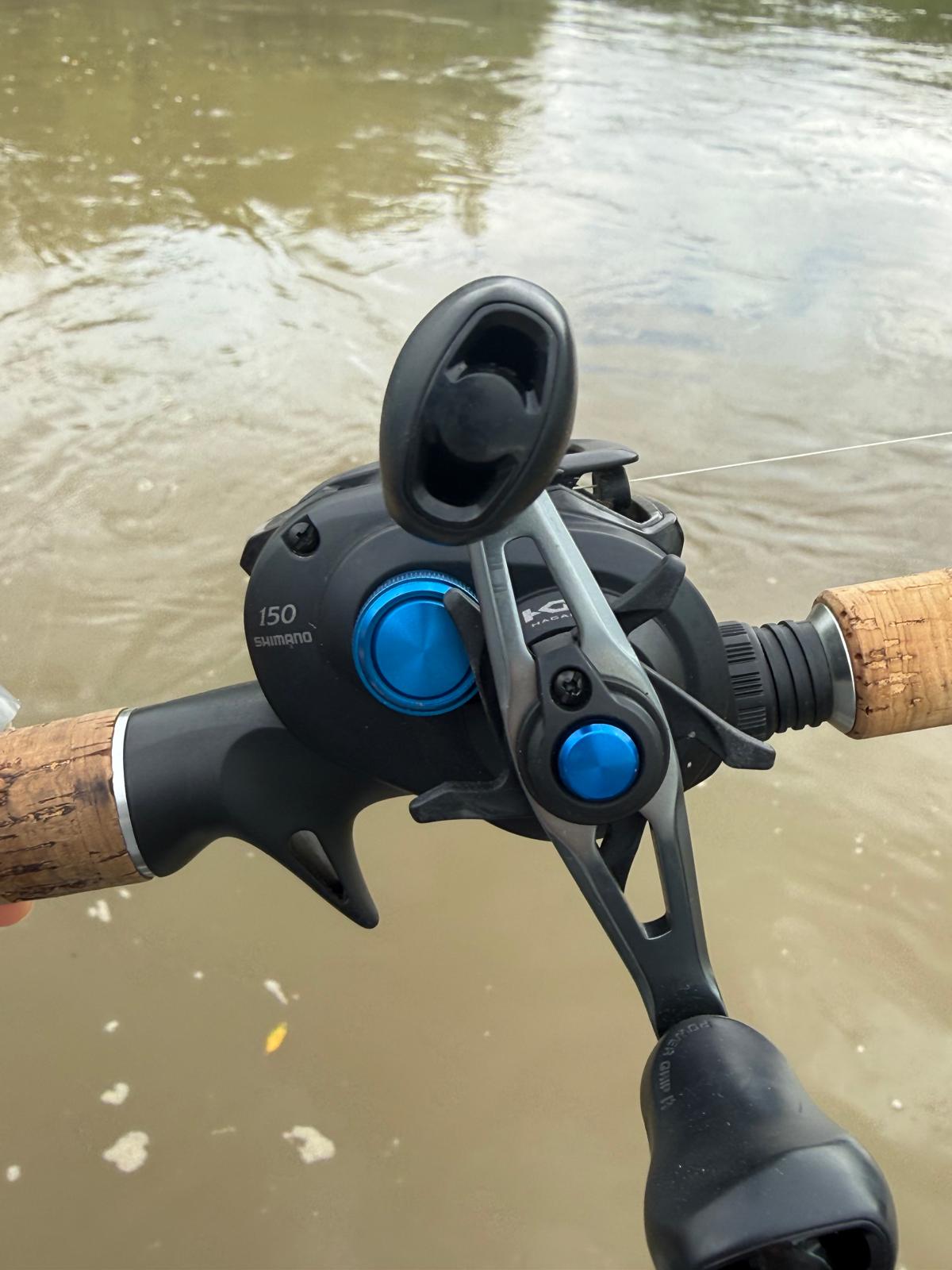
Rods: Shimano Blunt Force 651 baitcaster rods, offering the backbone to pull big fish away from structure while still maintaining good sensitivity.
Reels: Shimano SLX 150 baitcasters, providing smooth drag and excellent casting control—ideal for repeated, accurate casts and aggressive strikes.
Line & Leader: 30lb Fins braided line paired with a 60lb leader, giving the strength and abrasion resistance needed to fish confidently around heavy cover.
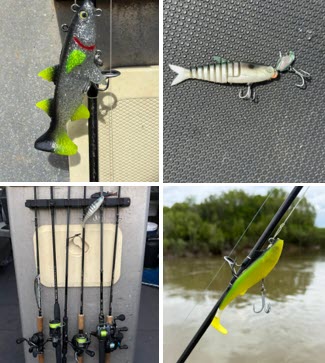
Style: We used large soft plastic swimbaits, working them tight to structure where big barra were holding, allowing us to apply pressure early and land fish quickly.
Our techniques for the day
It was very much a “thousand casts” kind of day—covering water and staying persistent. We worked a mix of structure including edges, drop-offs, flats, current lines, debris, and tight along the banks. The approach was simple but effective: accurate casting into likely holding zones, followed by a slow, steady retrieve with the occasional subtle jerk to bring the lure to life.
More than anything, success came down to precision and patience. Placing casts tight to structure, letting the lure do the work, and staying alert at all times was key—you never knew when a barra would strike. We also mixed things up throughout the day by changing lure colours and profiles, adjusting to what the fish responded to best.
Runoff Barra Fishing Q&A + Trip Highlights
What we loved about this Barramundi Runoff Fishing Charter experience!
The Guide (Josh) – Josh was exceptional—friendly, knowledgeable, and incredibly easy to spend a full day on the water with. From the start, everything felt relaxed and well organised. What stood out was how approachable he was; we even caught up the night before the charter for a drink, which made the whole experience feel more personal and welcoming.
His local knowledge and experience were clear throughout the day. He kept things simple, explained what mattered, and created an environment where you could just enjoy the fishing without overcomplicating it.
The Fishing Experience – The fishing itself was straightforward and effective. It wasn’t overly technical—success came down to accurate casting and a slow retrieve—but that’s what made it enjoyable. It felt almost too easy at times, yet still required focus and consistency.
It was a classic barra session built on patience and repetition, with every cast feeling like it could produce a strike.
The Gear & Tackle – All gear provided was high quality, well maintained, and clearly suited to the style of fishing. There was also a good variety of setups available, catering to different experience levels and personal preferences, which made the day more comfortable for everyone on board.
The Overall Operation – From start to finish, the entire experience was smooth and professional. Communication and booking were simple, pickup was easy, and everything ran on time.
The meet-and-greet the night before was a standout touch—it added a personal element that you don’t often get and set the tone for a great day on the water. Overall, it was a well-run charter that delivered both on and off the water.
My top tips for this charter.
Stay patient and commit to the process – This is a high-volume casting style of fishing. You’ll be working a range of structure—edges, snags, drop-offs, and current lines—so consistency is key. Keep casting with intent and stay switched on, because barra strikes are often sudden and unforgiving. Our two biggest barra came at the end of the day.
Focus on accuracy over complexity – The technique itself is simple: accurate casts, a slow retrieve, and the occasional subtle twitch. The difference comes from placing your lure in the right zones and letting it work naturally. It’s not technical, but it rewards precision and patience.
Be open to small adjustments – Even with a simple approach, changing lure colours or profiles throughout the day can make a difference. If things slow down, small tweaks can help trigger a response.
Come prepared for the conditions – It’s a full day in tropical heat, so comfort matters. Wear lightweight, breathable, quick-dry clothing, and bring essentials like a hat, sunglasses, and insect repellent. Food, drinks, and sunblock are provided, but bring your own if you have preferences.
Enjoy the experience – Everything is well organised and easy, allowing you to focus on fishing and enjoying the day. It’s a relaxed, fun environment—so take it all in and enjoy your time on the water.
What makes the barramundi runoff so unique compared to other times of the year?
The runoff is different because everything gets pushed into the same areas. During the wet, there’s water spread all over the floodplains, and the barra have room to move. But when that water starts draining back into the creeks and rivers, all the bait, prawns and little fish get funnelled into the main system.
That’s when barra really switch on. They don’t have to go looking too hard — the food comes to them. You’ll often find them sitting around drains, creek mouths and colour changes, just waiting for something to get washed past. That’s what makes it such an exciting time to fish, because when it lines up, it can go from quiet to chaos very quickly.
When does the runoff typically fire in Kakadu, and how do you know it’s at its peak?
Around Kakadu, the runoff usually gets going from about March through May, depending on how big the wet season has been. Some years it starts early, some years it hangs around longer. It all comes down to rainfall, access, water levels and how the floodplains are draining.
You know it’s firing when there’s good steady water movement coming off the plains, the bait is stacked up, and the fish are sitting in those obvious ambush spots. You’ll see bait flicking, birds hanging around, and sometimes barra boofing right on the edge. When the water, bait and tide are all working together, that’s when you know you’re in with a real chance.
Why is the South Alligator River system so productive during the runoff?
The South Alligator is such a good runoff system because it has so much floodplain country feeding into it. During the wet, all that country fills up with water and life. Then as it drops, everything starts draining back into the river, and that brings a lot of food with it.
For barra, it’s a perfect setup. There are drains, little creeks, bends, snags, colour changes and plenty of current lines. The fish don’t need to roam around aimlessly — they can sit in the right spot and let the river bring food straight to them. That’s why local knowledge makes such a difference there. It’s not just about finding water; it’s about knowing which water is worth fishing at that exact time.
If you had to narrow it down, what are the first three areas you look for each day?
First thing I’m looking for is running water. A good drain with water pushing out of it is always worth a look, especially if there’s bait coming with it.
Second would be creek mouths and junctions. Anywhere water is meeting, turning or pushing around a corner can hold fish.
Third is a good colour change. Barra love sitting where dirty runoff water meets cleaner water. It gives them cover, and it gives them an easy place to ambush bait. If I can find all three together — flow, bait and a colour edge — that’s the sort of spot I want to spend time on.
What does a “perfect” runoff setup look like — water colour, current, and structure?
A perfect runoff spot doesn’t always look pretty. In fact, it can look like a dirty little drain or a messy bit of current running past a bend. But if you know what you’re looking at, it stands out straight away.
I like water with a bit of colour in it, not dead still and not ripping too hard. You want enough current to move bait, but not so much that the fish have to work too hard. Add in a snag, rock bar, creek mouth, drop-off or little back eddy, and that’s a good setup. The best spots usually have somewhere for bait to get pushed and somewhere for barra to sit out of the main push.
What signs tell you barra are actively feeding before you even make a cast?
You can usually tell a lot before you even pick up the rod. I’m watching for nervous bait, little fish flicking on the surface, prawns skipping, birds hanging around, or that deep “boof” sound barra make when they hit bait.
Sometimes it’s not obvious. It might just be one patch of water that keeps rippling differently, or bait that keeps getting pushed to the same edge. If the river feels alive, I’ll give it time. If it’s dead quiet, no bait, no movement and no signs, I usually won’t waste too long there.
Where do the big, metre-plus barra sit, and how do you target them specifically?
The bigger barra are usually smarter with where they sit. They don’t like wasting energy in the hardest current. A lot of the time they’ll be just off the main flow — close enough to grab bait, but tucked where they can sit comfortably.
That might be behind a pressure point, beside a drain, on the deeper side of a colour change, around timber, or on the edge of a bend. To target them, you’ve got to put the lure right in that zone and keep it there. Big fish often won’t chase something halfway across the river. You need accurate casts, a bit of patience, and a retrieve that gives them time to eat it.
What lures or techniques consistently work best in dirty runoff water?
In dirty water, I like lures that make it easy for barra to find them. Paddle-tail plastics, vibes, hard bodies and lures with a strong swimming action all have their place. You want something with vibration, flash or a good profile, because visibility can be pretty limited.
The biggest thing is not working the lure too fast. A slow roll, a pause, a little lift, or letting it swing naturally with the current can make a big difference. Plenty of barra eat on the pause or just as the lure changes direction. In runoff water, you want that lure looking like an easy feed, not something racing past them.
What’s the biggest shortcut or tip that helps anglers succeed faster in the runoff?
The biggest tip is simple: fish where the food is going. Don’t just cast at every bit of water that looks barra-ish. Ask yourself where the bait is being pushed, where the current is taking it, and where a barra could sit without working too hard.
Once you start thinking like that, you’ll waste a lot less time. A drain with no bait and no movement might look good, but it may not be worth much. A scruffy little colour change with bait flicking and steady flow might be the best spot of the day.
That being said if you are a bit unsure, just keep casting along the river edges.
What’s something you do differently as a guide that most anglers wouldn’t think of?
A lot of people think guiding is just knowing where the fish are, but it’s really knowing when to be there. Some spots only fire for a short window. Too early and nothing happens. Too late and the fish have moved or shut down.
I’m always watching the tide, the flow, the bait and how the water is changing. I’ll also position the boat so the cast comes through the strike zone properly, not just somewhere near it. Little things like lure angle, boat position and timing a drain can be the difference between a quiet session and a proper barra bite.
Photo gallery of our day on the water with Josh
Experience Trophy Barra Fishing In Kakadu
If you want to experience barramundi runoff fishing at its best, a session on South Alligator River is hard to beat. This is classic Top End barra fishing — working drains, reading colour changes, and targeting aggressive fish as monsoonal floodwaters recede through the Kakadu system.
What really elevates the experience is the combination of local knowledge and environment. Guide Josh understands how tides, bait movement, and runoff conditions influence barra behaviour, putting us consistently in high-percentage areas throughout the session. In a fishery where timing and positioning are everything, that experience makes a huge difference.
Beyond the fishing itself, Kakadu delivers an unforgettable backdrop. From winding tributaries and flooded plains to crocodile country and explosive barra strikes, the entire experience feels wild, remote, and uniquely Northern Territory.
If you’re looking to understand runoff barramundi fishing properly and experience one of Australia’s most iconic barra fisheries, Kakadu Fishing Tours delivers.
Other Fishing Guides & Trips
Fishing Norway Like A Local: A Bergen Fjord Experience
Catching Loads of Fish w/ Endre Hopland of Fiskeskolen Fishing the fjords of Bergen for species even...
Beyond Amsterdam: Catching Big Perch & Zander in the Dutch River Delta
Catching Big Perch & Zander in the Netherlands Big water, big predators, and a completely different Dutch...
Street Fishing Amsterdam: Chasing Pike, Perch & Zander in the City Canals
Street Fishing Amsterdam: Chasing Pike, Perch & Zander in the City Canals Serious predators patrol the canals...
Hawkesbury Estuary Perch: Chasing Winter's Silver Ghosts
Hawkesbury Estuary Perch Fishing Catching Winter EP's with Sydney Flyfishing Tours! ...
Noosa Winter Fishing: Trophy Kingfish, Endless Species And A Very Happy Kid
Noosa Turned It On Trophy Kingfish, Endless Species and One Very Happy Kid! Noosa Winter...
Barramundi Runoff Fishing Guide: Catching Trophy Barra In Kakadu
Barramundi Runoff Fishing In NT Dirty water, bait stacking up, and barra switching into full ambush mode — this...
Chasing Giants Off Exmouth: Marlin Fishing And More With Peak Sportfishing
Marlin Fishing Off Exmouth Black marlin in the spread, mahi mahi flashing blue, mackerel smashing lures, and wahoo...
Darwin Fishing: Catching Loads of Fish With Anglers Advantage Fishing Charter
Darwin Harbour Fishing Catching Trevally, Queenfish, Barramundi, Snapper & More With Anglers Advantage Fishing...
Fishing in Malaysia: Targeting Giant Snakehead in Rivers and Lakes
Triggering Explosive Strikes With Multiple Tactics! Fishing the Freshwaters of Kedah: Inside Giant...
Visiting Hawaii? Add a Fishing Charter in Waikiki to Your To Do List (Marlin, Tuna & Mahi Mahi)
Visiting Hawaii? Add a Fishing Charter in Waikiki to Your To‑Do List Marlin, Tuna and Mahi Mahi — big game...
Beyond Fashion and Food: Italy’s Epic Sportfishing Off Sardinia
Beyond Fashion and Food: Italy’s Epic Sportfishing off La Maddalena, Sardinia Lure jigging deep reefs and blue...
Catch Trophy Jewfish on The Hawkesbury - Big Mulloway With Proven Lure Tricks & Hotspots
Catching Trophy Jewfish on The Hawkesbury. Big Mulloway With Proven Lure Tricks & Hotspots ...
Epic Port Stephens Fishing Charter: Flathead, Bream, Jewfish & Tuna
Epic Port Stephens Fishing: Flathead, Bream, Jewfish & Tuna Join us in Nelson Bay with local guide Paul Lennon...
Hilton Head Fishing: Where Families and Serious Anglers Both Win
From kids to pros, Hilton Head delivers unforgettable fishing action! Fishing Hilton Head’s...
Winter Fishing Sydney Harbour: The Perfect Way to Get the Kids Outdoors
Hooked on Fun, One Fish at a Time A Family Day of Fishing Fun on Sydney Harbour Sydney Harbour isn’t just...
Non-Stop Action: Catching Loads of Fish with Noosa River Fishing Safaris
Fishing The Noosa River, The Best Thing To Do In Noosa. Noosa is famous for its beaches, boutiques, restaurants, and hiking...

Trout and Salmon Fishing Lake Takepo New Zealand
Targeting Rainbows, Browns and Salmon Fishing Lake Tekapo's Rivers, Dam and Canals Lake Tekapo,...

Peacock Bass Fishing in Singapore: A Hidden Gem for Anglers
Catching Peacock Bass in Singapore A Bucket List Fish in the City Catching the mighty Peacock...

Hawkesbury River Bream Fishing
Catching Bream Based on Tide - Never Fail Techniques! Fishing The Hawkesbury & It's Incredible...

Sydney Harbour Kingfish Fishing With Craig McGill
Kingfish tactics, baits, locations and more! Fishing Sydney's Iconic Waters For Kingfish Sydney harbour is...