

Catching Big Perch & Zander in the Netherlands
Big water, big predators, and a completely different Dutch fishery.
Fishing the Big Waters of the Dutch River Delta
Around an hour and a half from Amsterdam, the landscape opens into a beautiful part of the Netherlands. Farmland, broad waterways and huge skies dominate the view, with towering wind turbines rising above the horizon and birdlife constantly moving across the water.
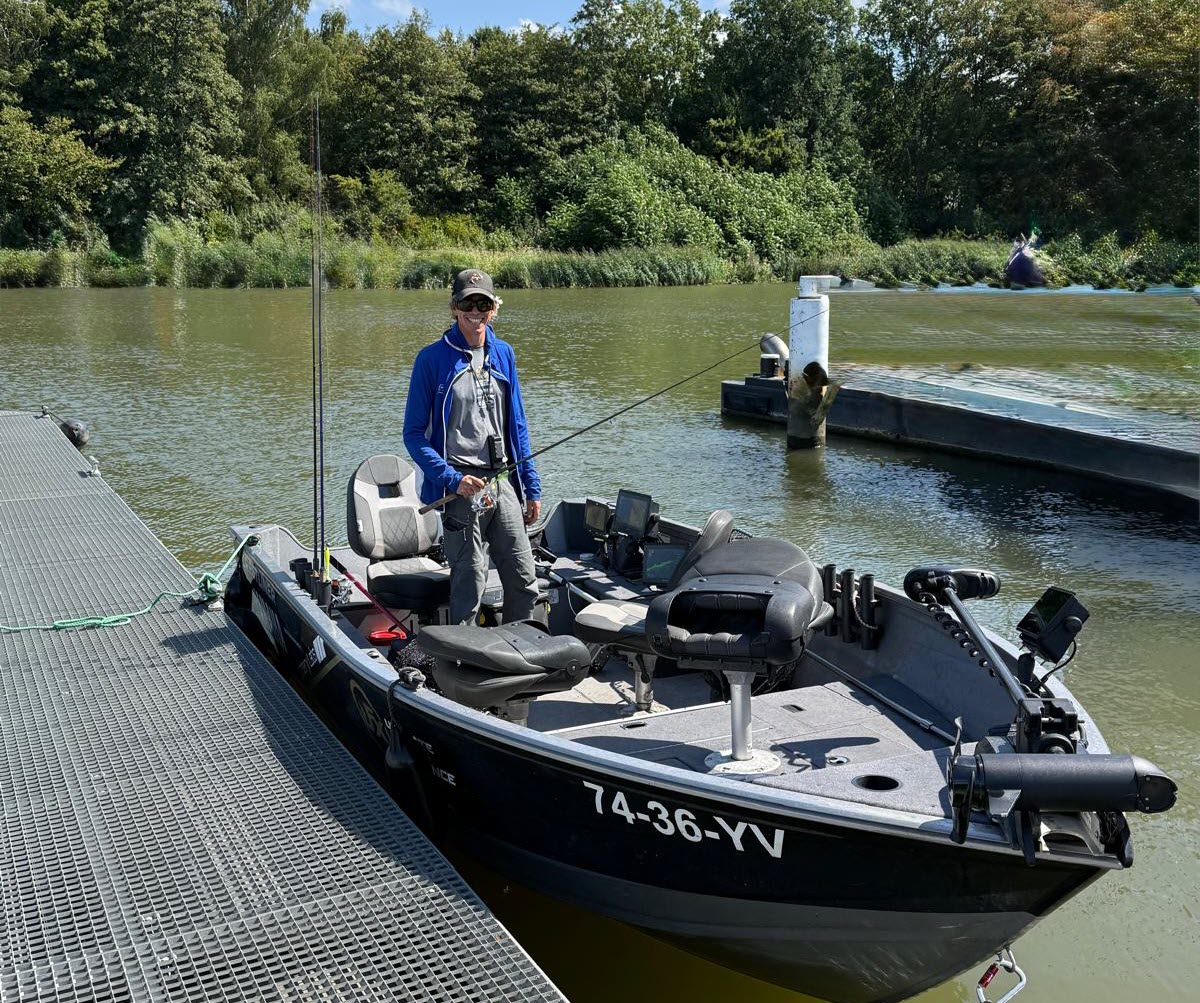
We met Thom Prüst from UFX Fishing at Marina Crezeelaan, where he welcomed us aboard his custom fishing boat, fully equipped with modern electronics and high-quality tackle. From there, we headed out onto the Dutch River Delta in search of two of the region’s standout freshwater predators — European perch and zander.
Part of what makes targeting these two species so interesting is how differently they can use such a large river system. Perch are often closely associated with shelter and structure, while zander are particularly well suited to large, murkier rivers and lakes. Finding both meant searching different parts of the water, adjusting our presentation and using the boat’s electronics to help locate promising areas.
The scale of the water immediately stood out. Wide channels and huge open stretches gave Thom plenty of water to search, while the surrounding landscape made the experience just as memorable. Wind turbines punctuated the skyline, birds worked the waterways around us, and the open river had a calm, expansive feel that made simply being there enjoyable.
With two very different predators to find and an enormous stretch of water ahead of us, it was the perfect setting to experience another side of Dutch freshwater fishing.
Quick Facts
- The wider delta includes one of Europe’s great freshwater tidal landscapes. The nearby Biesbosch is the largest freshwater tidal area in Europe, shaped by rivers, creeks, islands and the continuing movement of the tide.
- This region produces large perch. Researchers are currently tagging large European perch in the Hollands Diep and Haringvliet to learn where these XXL fish travel, spawn and spend their time.
- Zander are relative newcomers, they were not established in the Netherlands before the late 1800s, expanding westward after introductions into major European river systems.
- The birdlife is just as impressive as the fish. The Biesbosch is important habitat for fish-eating raptors, and in 2016 it became the first place in the Netherlands where ospreys successfully bred.
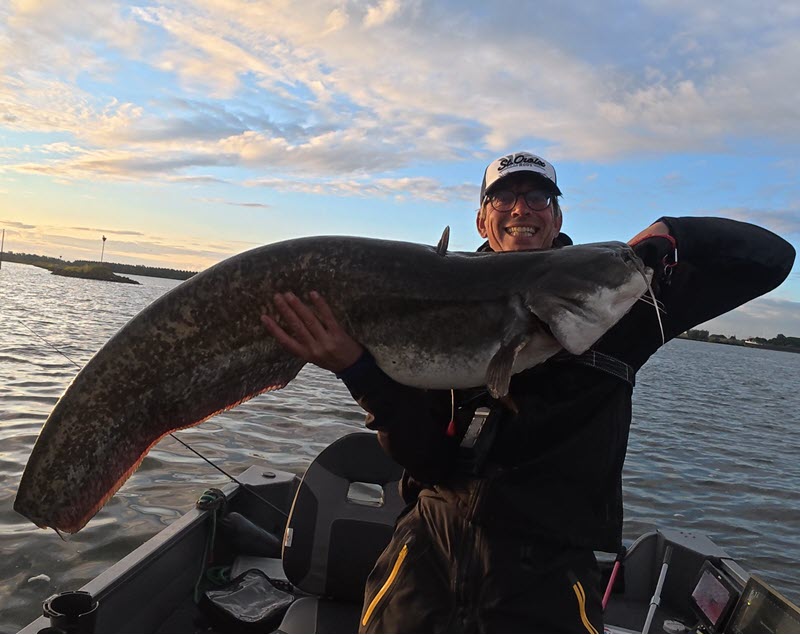
Our Guide:
Thom Prüst from UFX Fishing
Thom is a full-time predator fishing guide with more than 15 years of experience across the Hollands Diep, Volkerak and Biesbosch. He specialises in finding and targeting zander, European perch and pike across large Dutch waterways, using modern electronics, precise lure presentation and years of local knowledge to locate fish efficiently.
Thom is also the founder of Lure Fishing Guide, co-founder of UFX Fishing, and author of No Rock Ever Bit, a book focused on zander fishing and lure control. His technical approach and deep understanding of big-water predator fishing made him an ideal guide for this session.
Picking Our Location
Launch: Thom chose Marina Crezeelaan because it put us close to the areas he wanted to fish, allowing us to spend more time casting and less time travelling.
Location 1: We started with a quick crankbait session for perch at a spot Thom described as fairly hit and miss. Nothing showed, so we kept moving.
Location 2: The next area was much weedier, but very low water levels from the dry conditions limited how far we could push in. We still managed to land one small fish.
Location 3: We then worked a productive-looking stretch of structure and hooked a much better fish, only to lose it right beside the boat.
Location 4: Switching focus to zander, we changed to soft plastics and worked deeper water. We managed one bite, but no fish made it aboard.
Location 5: From here, the session started to come together. We stopped at several different points, working soft plastics for zander and landing more than six quality fish along the way.
Location 6: To finish the day, we returned to perch. This proved to be one of the strongest stops of the session, producing multiple big perch along with a few frustrating losses.

Redfin
Perca fluviatilis
Top Target Species
The European Perch (Perca fluviatilis), known as redfin perch in Australia, was one of our main targets in the Dutch River Delta. Easily recognised by its dark vertical bars and red-orange fins, this predatory species thrives across the Netherlands’ large rivers and lakes, where bigger fish increasingly attract specialist anglers. Large perch feed heavily on smaller fish such as roach, smelt and juvenile perch, and their aggressive strikes and strong fight on light tackle make them an exciting fish to target with lures.
Tackle we used for the day
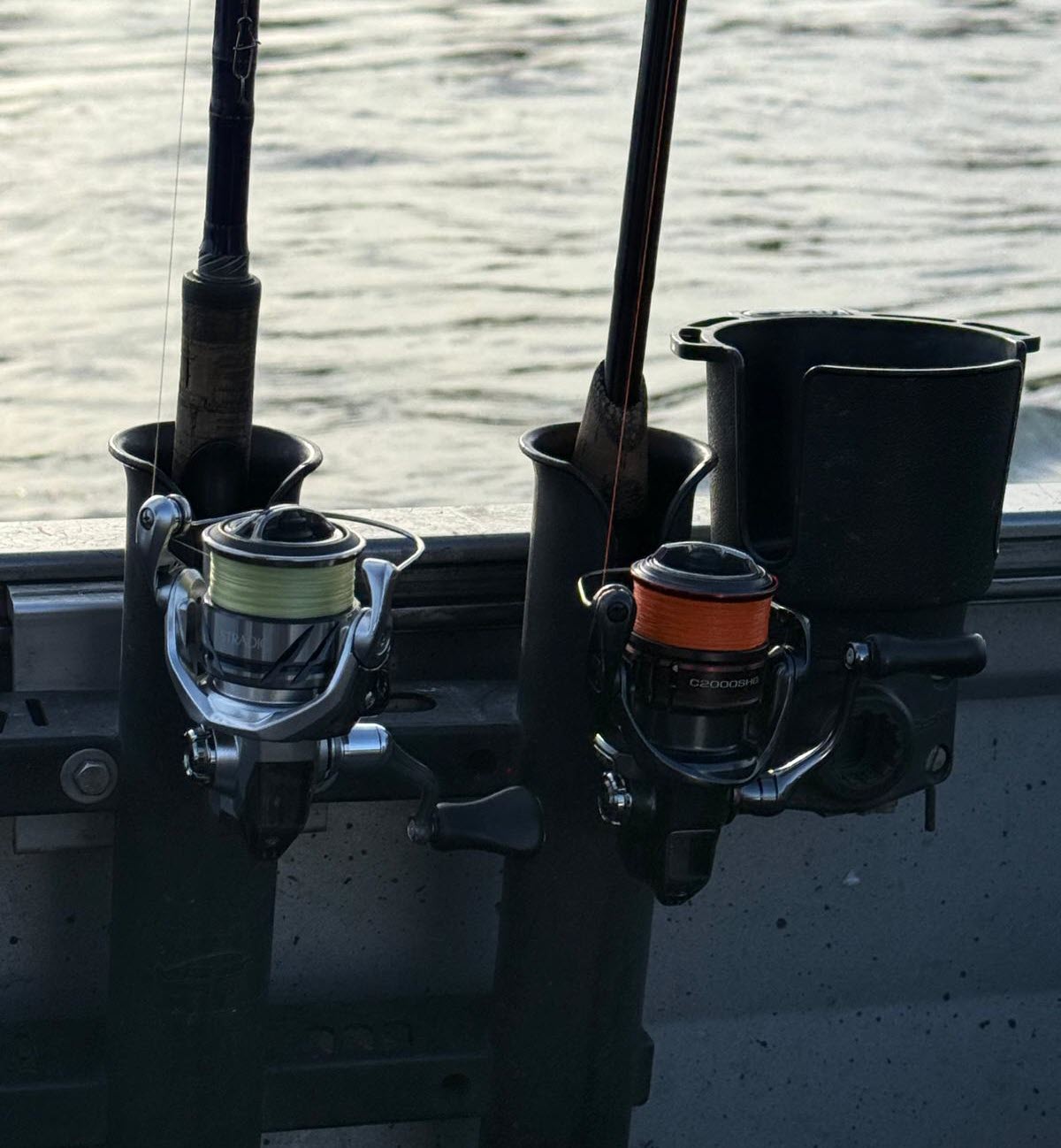
Our setup was all high-end, purpose-built predator gear, combining light spinning tackle with the sensitivity needed for soft plastics and enough control for larger perch and zander.
Rods:St. Croix Legend Tournament spinning rods — lightweight, responsive and particularly well suited to the precise lure work we used throughout the day.
Reels:Shimano Stradic C2500 spinning reels, giving us a light, balanced setup for continuously casting and working lures.
Line & Leader: 8lb braid matched with a trace, providing excellent sensitivity and direct contact with the lure while still giving us the protection needed when targeting predators.
Soft Plastics: For zander, we primarily used Delalande softbaits, worked through deeper water and around the areas Thom identified as holding fish. Soft plastics also accounted for some of our perch fishing.
Hardbodies: Perch were targeted with a variety of crankbaits and topwater hardbodies, allowing us to search different depths and change presentations depending on where the fish were holding.
Style: The tackle was built around versatility — finesse fishing soft plastics for zander, then switching between plastics, crankbaits and surface lures when searching for big perch.
Our techniques for the day
Topwater hardbodies: We worked surface lures across likely perch areas, keeping the retrieve active while watching the surrounding structure and weed. The key was to keep the lure moving naturally without letting it foul up.
Crankbaits: Crankbaits were fished in much the same way — cast, retrieve and cover water — but lure depth was important. We constantly adjusted our retrieve to keep the lure above weed, structure and the bottom.
Soft plastics for zander: This was the technique that felt most different. Rather than lifting or jigging the rod, we cast out, let the lure sink to the bottom, then used a few quick turns of the reel to bring it up off the bottom. We then let it sink again and repeated the process all the way back to the boat.
Soft plastics for perch: We also used plastics around perch areas, changing lure size, depth and retrieve depending on how the fish were responding and where they were holding.
Q&A With Thom Prüst + Trip Highlights
What we loved about this Netherlands Fishing Charter experience!
The Guide — Thom Prüst – Thom was excellent from the very first enquiry. Communication was clear, detailed and professional, and he set realistic expectations before the trip. On the water, he was friendly, easy to talk to and very good at explaining not just what we were doing, but why we were doing it. That teaching style made the session much more valuable.
The Fishing Experience – Conditions were tough after a very dry summer, but Thom worked hard to keep us around fish and eventually put us onto some quality zander and perch. I also learned a completely different way of fishing soft plastics than I normally use back in Australia, which made the day feel genuinely educational as well as fun.
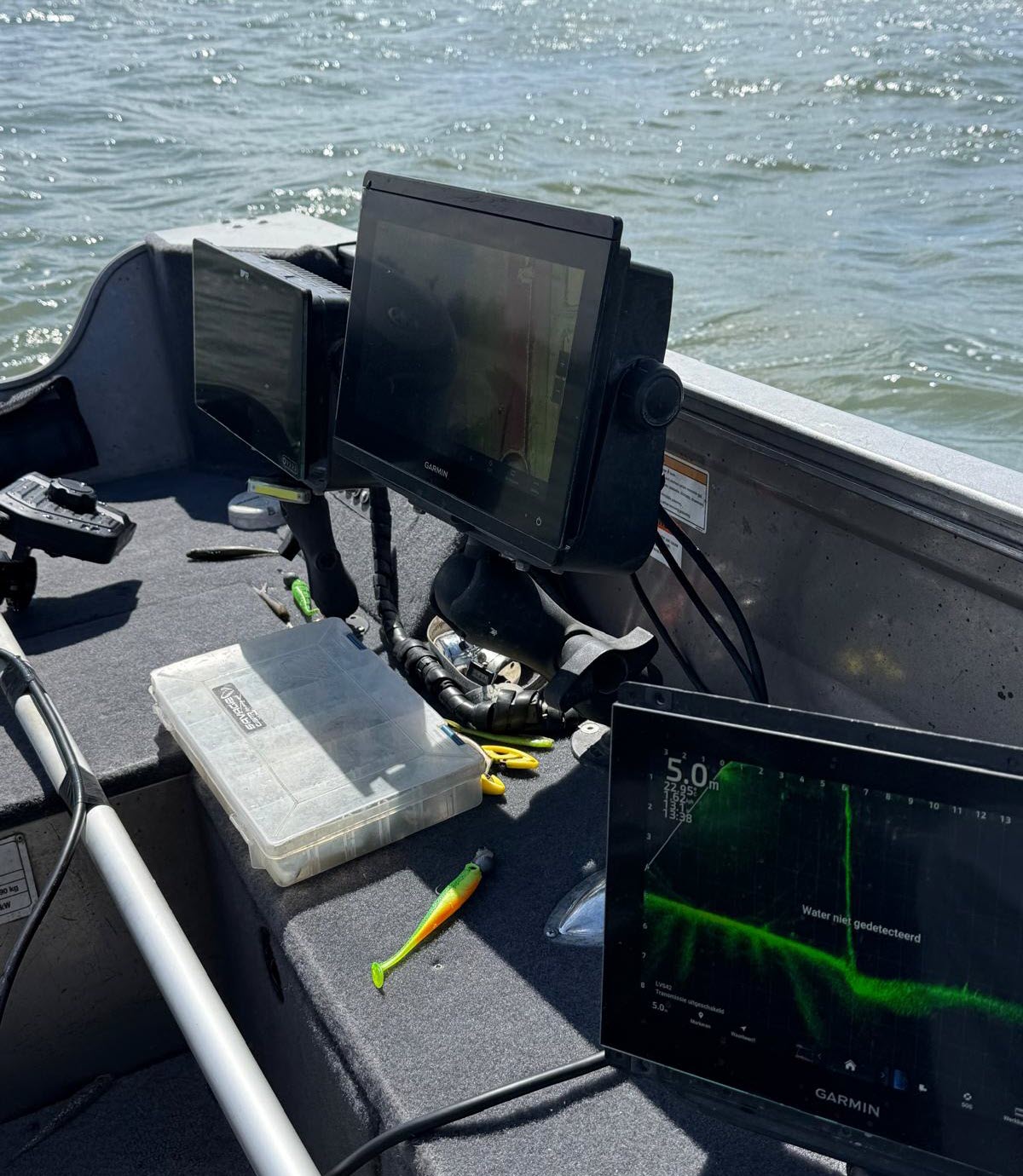
The Boat & Electronics – The boat was immaculate, well organised and packed with high-end technology. Raymarine Axiom, Garmin LiveScope, multiple GPSMAP displays, Navionics mapping and a Minn Kota Terrova trolling motor gave Thom an impressive setup for finding fish and controlling the boat. Seeing LiveScope used properly in real time was a highlight in itself.
The Gear & Tackle – Everything we used was top quality, from the St. Croix rods and Shimano Stradic reels to the soft plastics, crankbaits and topwater lures. That matters on a specialist charter because good equipment makes a noticeable difference when fishing technical presentations for quality fish.
The Overall Operation – This was a very polished and professional charter from start to finish. Thom combined strong local knowledge, quality equipment, clear instruction and a genuine determination to find fish despite difficult conditions. He also speaks multiple languages, and his English was excellent, making communication effortless throughout the day. Overall, it was a fun, technical and highly enjoyable fishing experience that I would happily recommend.
My top tips for this charter.
Read Thom’s pre-trip email carefully – Thom sends detailed information before the charter covering what to bring, what to wear and what to expect. It is thorough and tailored to the season, so follow it closely.
Use the brochure as your checklist – The preparation guide covers the practical details you are likely to need, which makes getting ready for the day simple and removes a lot of guesswork.
Dress for the conditions – Weather on the Dutch waterways can change, so follow Thom’s seasonal advice and bring the right layers, footwear and protection for the forecast.
Come ready to learn – Thom explains his techniques in detail, so make the most of the opportunity to ask questions and try methods that may be different from how you normally fish.
Bring good energy – More than anything, arrive enthusiastic and open to the experience. If you have never fished the Netherlands before, the environment, techniques and style of predator fishing can feel completely new — and that is a big part of what makes the charter so enjoyable.
How do you decide whether to target perch or zander first on a given day?
From June through October, I almost always start with perch. In the waters I fish, this is when they are at their most active.
One of the main reasons is that perch often feed aggressively during first light. I have never caught a perch in complete darkness, but as soon as the first sunlight reaches the water they often switch into hunting mode. This feeding window usually lasts one or two hours before slowing down, at which point I often switch my focus to zander.
From November onwards, I generally target zander from the start of the day. Perch are still possible, of course, but my primary focus shifts towards zander during the colder months.
When targeting big perch in the Dutch River Delta, what separates an area that holds average fish from one that regularly produces genuinely large perch?
Honestly, I don’t know if there is one specific factor.
The Dutch River Delta naturally produces larger-than-average perch compared to many other fisheries. At the same time, we rarely catch huge numbers of fish. Catching 20 or 30 perch in a few hours is uncommon.
What makes the Delta special is consistency. Once you discover the right area, you can sometimes catch multiple perch over 40 cm, and even fish over 45 cm, day after day for weeks on end.
Where do perch and zander hold in the Dutch River Delta? and how does that change where you search for each species?
There is a natural separation between perch and zander habitats, although in the Delta those areas are often very close together. As a result, you frequently catch both species in the same general area, and sometimes it even seems as if they have swapped positions overnight.
Perch typically hold on shallow plateaus in 2 to 3 metres of water, preferably where there is a clear transition to deeper water. My ideal perch spot is a large mussel-covered plateau surrounded by deeper water. The steeper the drop-off, the better. What matters most is a distinct depth change, for example from 2 to 3 metres down to 6 to 9 metres.
In these situations, perch often stay on top of the plateau, while zander position themselves deeper, usually close to the slope where the current and eddies are strongest. These are the classic locations I visit first on most fishing days.
Beyond perch and zander, what other species can realistically turn up during a day on the Dutch River Delta, and which ones do you think are underrated by visiting anglers?
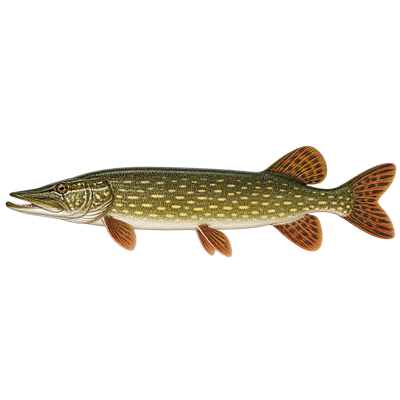
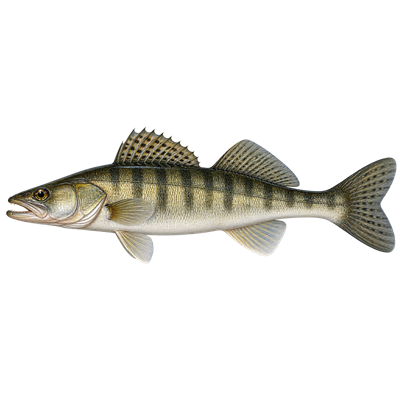
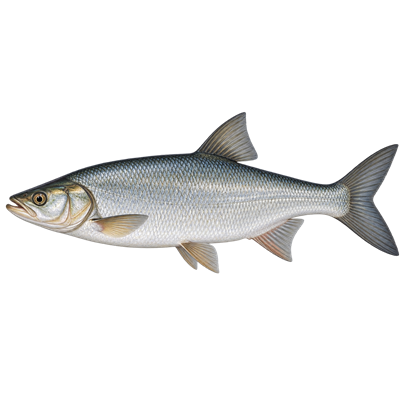
Besides perch and zander, anglers have a realistic chance of catching pike, asp and European wels catfish.
These five species make up the main predatory fish community of the Dutch River Delta.
What baitfish do perch and zander feed on in the Dutch River Delta?
They feed on pretty much everything they can hunt and swallow. Small roach, gobies, crayfish, shrimp and other baitfish all feature on the menu. Cannibalism is common too. Big perch eat small perch, big zander eat small zander, and both species will happily eat each other’s young whenever they get the chance.
They are opportunistic predators. If it moves, is easy to catch and fits in their mouth, they will try to eat it.
When the fish aren’t responding, what are the first things you change — location, lure, depth, colour or retrieve?
The question assumes the fish are present. If I know fish are there, location is actually the last thing I change.
Everything comes down to presentation. In theory, fishing is simple: put your lure in front of the fish. Whether it bites or not is up to the fish, but if your lure never reaches the fish, your chances are minimal.
That means I adjust lure type, depth and retrieve. A crankbait might be ideal for fish feeding in mid-water. A soft plastic is often better for fish holding close to the bottom. A 5-gram jighead and paddletail may be perfect on a shallow mussel bed, while a 30-gram jighead with a V-tail softbait could be necessary to reach fish holding in 10 metres of water with heavy current.
Colour is the least important factor. In my opinion, colour catches anglers more than it catches fish. Fish the colours you trust and have confidence in.
The golden rule is: never leave fish to find fish. When fish are present, stay with them and work out how to make them bite. Only when there are no fish do I start looking for a new location.
How do weather and water conditions affect perch and zander fishing in the Netherlands?
Of all weather factors, wind is by far the most important.
Contrary to the common belief that an east wind is bad for fishing, or that zander need a bit of chop on the water to feed, I have never seen any convincing evidence that either wind direction or wind strength directly affects fish behaviour. Wind, however, is absolutely critical, not because of what it does to the fish, but because of what it does to us anglers.
Wind direction and strength largely determine which areas of the Delta can be fished safely and effectively. Depending on the conditions, certain spots can become difficult, impossible or even dangerous to reach. Wind affects boat control, casting accuracy, lure presentation and the ability to stay positioned on a productive spot.
My preference is simple: as little wind as possible. In calm conditions I have complete freedom in spot selection and can fish with maximum precision. The more accurately I can present a lure, the more fish I catch.
Water level, current and water clarity are closely connected. Higher water levels usually mean stronger current and reduced visibility. These conditions generally favour zander. They often become more active when current increases, and their light-sensitive eyes allow them to hunt effectively in both deep and stained water.
The downside is that fishing itself becomes much more technical. Presenting a lure effectively in deep water with heavy current requires considerably more skill and control.
Lower water levels usually mean less current and clearer water. These conditions favour perch. Perch are visual predators that thrive in clear water, which is also why I rarely catch them in darkness. They typically become active once daylight starts to increase after sunrise.
In very turbid water, perch fishing can become extremely difficult, whereas zander usually continue feeding without much trouble.
What mistakes do visiting anglers commonly make when targeting Dutch perch and zander?
The biggest mistake is focusing on lure characteristics instead of presentation. Many anglers spend hours discussing whether a lure should be red, green, brown, loaded with glitter, high-action, low-action, etc. In my experience, that’s looking at the problem from the wrong angle. What matters is whether the lure can be presented correctly. A predator wants a lure right in front of its nose and within its strike zone. The purpose of lure design is not to convince the fish. The purpose of lure design is to help the angler present the lure where the fish can intercept it. Therefore I also believe colour is completely irrelevant. Colour catches anglers, not fish. Shape, action and lure type do matter, but only because they affect presentation. If a fish is willing to bite, it bites because a lure is presented correctly in its strike zone, not because someone chose a different shade of green or added some glitter.
Another common mistake is leaving fish to go looking for fish. As long as I’m getting bites, seeing fish on the sonar, or otherwise know fish are present, I stay put. You have no way of knowing whether the next spot will hold fish at all. Many anglers leave a productive area because they think something better must be waiting around the corner. My golden rule is simple: never leave fish to find fish. When fish are present, focus on making them bite. Only when I am convinced the fish are no longer there do I start searching for a new location.
What changes have you personally seen in the Dutch River Delta fishery during your years guiding it?
The most obvious trend has been rising water temperatures.
This is particularly noticeable during winter. In the past, large numbers of zander would leave open waters such as Hollands Diep and migrate into the rivers as temperatures dropped. Today, winters are generally milder and many zander simply remain in the open water throughout the season.
Some fish still make the traditional migration, but enough remain behind that we can now consistently target zander on Hollands Diep throughout the year.
Another major development has been increasingly low water levels. In 2026, we experienced historically low summer water levels. Unfortunately, this is likely to become a recurring challenge in the future and something anglers and guides will need to adapt to.
What’s the best way to book a fishing session with you, and how far in advance should anglers reserve their preferred date?
The easiest way to book a trip is through the contact form on my website or by sending me a WhatsApp message, both of which are available directly through the website.
For weekend dates, I recommend booking at least two to three months in advance. Weekdays generally offer more flexibility, but booking a month ahead is still a good idea if you want to secure your preferred date.
Photo gallery of our day on the water with Thom
Excellent Fishing in the Netherlands!
If you’re looking to experience a different side of the Netherlands, a day on the Dutch River Delta with Thom Prüst from UFX Fishing is a great way to do it. The drive out of Amsterdam opens into beautiful countryside, farmland, huge waterways and wide skies before you even make the first cast.
Once on the water, the fishing delivered exactly what we came for. We landed multiple solid zander and finished with several big European perch, while working a mix of soft plastics, crankbaits and topwater lures across a variety of locations. It was technical enough to keep things interesting, but still relaxed and enjoyable from start to finish.
What really completed the experience was the quality of the operation. Thom was professional, knowledgeable and easy to fish with, while the boat, electronics and tackle were all first class. If you want to get beyond Amsterdam, see more of the Dutch countryside and enjoy some excellent predator fishing along the way, UFX Fishing is well worth considering.
Other Fishing Guides & Trips
Fishing Norway Like A Local: A Bergen Fjord Experience
Catching Loads of Fish w/ Endre Hopland of Fiskeskolen Fishing the fjords of Bergen for species even...
Beyond Amsterdam: Catching Big Perch & Zander in the Dutch River Delta
Catching Big Perch & Zander in the Netherlands Big water, big predators, and a completely different Dutch...
Street Fishing Amsterdam: Chasing Pike, Perch & Zander in the City Canals
Street Fishing Amsterdam: Chasing Pike, Perch & Zander in the City Canals Serious predators patrol the canals...
Hawkesbury Estuary Perch: Chasing Winter's Silver Ghosts
Hawkesbury Estuary Perch Fishing Catching Winter EP's with Sydney Flyfishing Tours! ...
Noosa Winter Fishing: Trophy Kingfish, Endless Species And A Very Happy Kid
Noosa Turned It On Trophy Kingfish, Endless Species and One Very Happy Kid! Noosa Winter...
Barramundi Runoff Fishing Guide: Catching Trophy Barra In Kakadu
Barramundi Runoff Fishing In NT Dirty water, bait stacking up, and barra switching into full ambush mode — this...
Chasing Giants Off Exmouth: Marlin Fishing And More With Peak Sportfishing
Marlin Fishing Off Exmouth Black marlin in the spread, mahi mahi flashing blue, mackerel smashing lures, and wahoo...
Darwin Fishing: Catching Loads of Fish With Anglers Advantage Fishing Charter
Darwin Harbour Fishing Catching Trevally, Queenfish, Barramundi, Snapper & More With Anglers Advantage Fishing...
Fishing in Malaysia: Targeting Giant Snakehead in Rivers and Lakes
Triggering Explosive Strikes With Multiple Tactics! Fishing the Freshwaters of Kedah: Inside Giant...
Visiting Hawaii? Add a Fishing Charter in Waikiki to Your To Do List (Marlin, Tuna & Mahi Mahi)
Visiting Hawaii? Add a Fishing Charter in Waikiki to Your To‑Do List Marlin, Tuna and Mahi Mahi — big game...
Beyond Fashion and Food: Italy’s Epic Sportfishing Off Sardinia
Beyond Fashion and Food: Italy’s Epic Sportfishing off La Maddalena, Sardinia Lure jigging deep reefs and blue...
Catch Trophy Jewfish on The Hawkesbury - Big Mulloway With Proven Lure Tricks & Hotspots
Catching Trophy Jewfish on The Hawkesbury. Big Mulloway With Proven Lure Tricks & Hotspots ...
Epic Port Stephens Fishing Charter: Flathead, Bream, Jewfish & Tuna
Epic Port Stephens Fishing: Flathead, Bream, Jewfish & Tuna Join us in Nelson Bay with local guide Paul Lennon...
Hilton Head Fishing: Where Families and Serious Anglers Both Win
From kids to pros, Hilton Head delivers unforgettable fishing action! Fishing Hilton Head’s...
Winter Fishing Sydney Harbour: The Perfect Way to Get the Kids Outdoors
Hooked on Fun, One Fish at a Time A Family Day of Fishing Fun on Sydney Harbour Sydney Harbour isn’t just...
Non-Stop Action: Catching Loads of Fish with Noosa River Fishing Safaris
Fishing The Noosa River, The Best Thing To Do In Noosa. Noosa is famous for its beaches, boutiques, restaurants, and hiking...

Trout and Salmon Fishing Lake Takepo New Zealand
Targeting Rainbows, Browns and Salmon Fishing Lake Tekapo's Rivers, Dam and Canals Lake Tekapo,...

Peacock Bass Fishing in Singapore: A Hidden Gem for Anglers
Catching Peacock Bass in Singapore A Bucket List Fish in the City Catching the mighty Peacock...

Hawkesbury River Bream Fishing
Catching Bream Based on Tide - Never Fail Techniques! Fishing The Hawkesbury & It's Incredible...

Sydney Harbour Kingfish Fishing With Craig McGill
Kingfish tactics, baits, locations and more! Fishing Sydney's Iconic Waters For Kingfish Sydney harbour is...