

Amberjack
Seriola Dumerili
 © 2026 MarineWise
Quick Facts
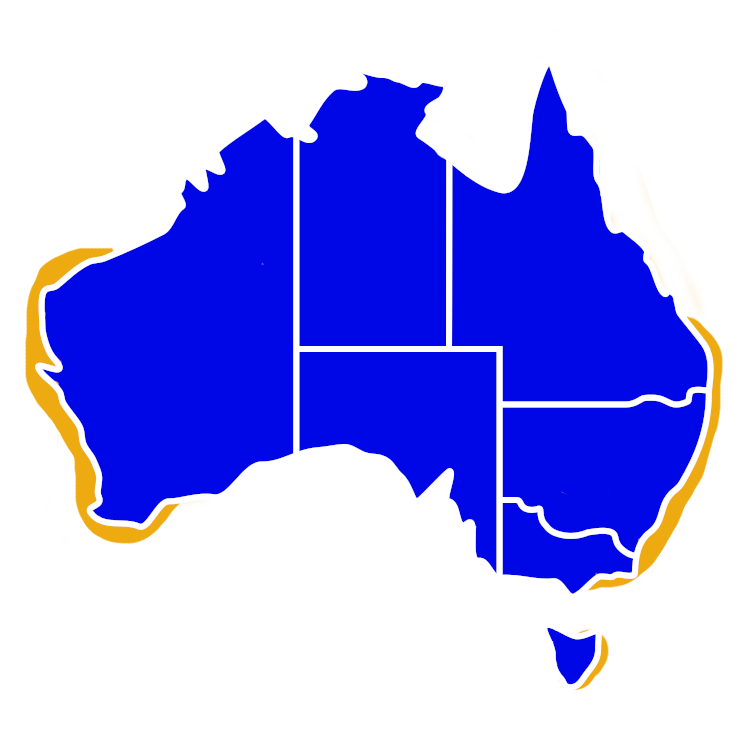
Distribution
Interesting Info
- The Amberjack is the largest of the amberjacks, a powerful, torpedo-shaped fish built for speed and long chases in the open sea.
- It can grow up to 190 cm (6.2 ft) and weigh over 80 kg (176 lb), though most caught are much smaller.
- In Australia it ranges widely—from Perth in Western Australia, across the tropical north, into Queensland, and down the east coast through New South Wales and Victoria, reaching eastern Tasmania. It is also found off Lord Howe and Norfolk Islands.
- Worldwide it has a circumglobal range in warm seas of the Atlantic, Indian, and Pacific Oceans, including the Mediterranean and Caribbean.
- Amberjacks have a bluish-grey back, silver sides, and a golden-brown stripe running from the snout through the eye to the tail.
- Juveniles sometimes school near floating debris or reefs, while adults prefer deeper reefs, wrecks, and offshore drop-offs.
- They are top predators, feeding on mackerel, squid, cuttlefish, and other schooling fish, often hunting in fast bursts.
- Divers and snorkellers sometimes see them patrolling deep reef slopes or circling wrecks in the company of other large predatory fish.
- Amberjack are famous among sport fishers for their raw power, often making blistering runs that test even heavy tackle.
- Spawning happens offshore in deep water during warmer months, with eggs and larvae drifting in the plankton.
- They grow quickly and are thought to live up to 15–17 years, longer than many other carangids.
- Amberjack often mix with related species like Yellowtail Kingfish, but their larger size and deeper body set them apart.
Species Interaction
Recreational & Commercial Fishing, Snorkelling & Diving
For recreational anglers, Amberjack are one of the hardest-fighting sport fish, prized for their power and stamina. They are caught by jigging, trolling, and live-bait fishing over deep reefs and wrecks. Snorkellers and divers may encounter them on reef slopes or around shipwrecks, often cruising in loose groups. Commercially they are taken in some parts of the world, especially in the Mediterranean and Japan, where they are also farmed for sashimi.
Scientific Classification
Kingdom: Animalia
Phylum: Chordata
Class: Actinopterygii
Order: Carangiformes
Family: Carangidae
Genus: Seriola
Species: Seriola dumerili
Conservation Status
The Amberjack is listed as Least Concern by the IUCN. It has a wide global distribution and remains common, though it is heavily targeted by commercial and sport fisheries in some regions. Protecting reef habitats and careful fishery management are essential to keep populations healthy.
Fish Taste Quality
Amberjack are considered excellent eating, with firm, white flesh and a rich flavour. They are popular grilled, baked, smoked, or eaten raw as sashimi, especially in Japan.
Taste Rating: 4.5/5
How to catch
Amberjack

Catch Difficulty: Difficult
Tackle: Patternoster Rig, Running Sinker Rig, Artificial Rig

Bait: Fresh cut flesh baits, Herring, Lures, Pilchards, Prawns, Squid, Soft plastics

Technique: Keep bait close to the reef/structure, Cast bait/jig/lure near schooling fish

Popularity: Highly targeted
Recreational Viewing
- Snorkeling & Scuba

Finding: Intermediate

Temperament: Peaceful

Location: Outer Reef, Lagoon

Danger: None


